Feet with history,
desires and
freedom.
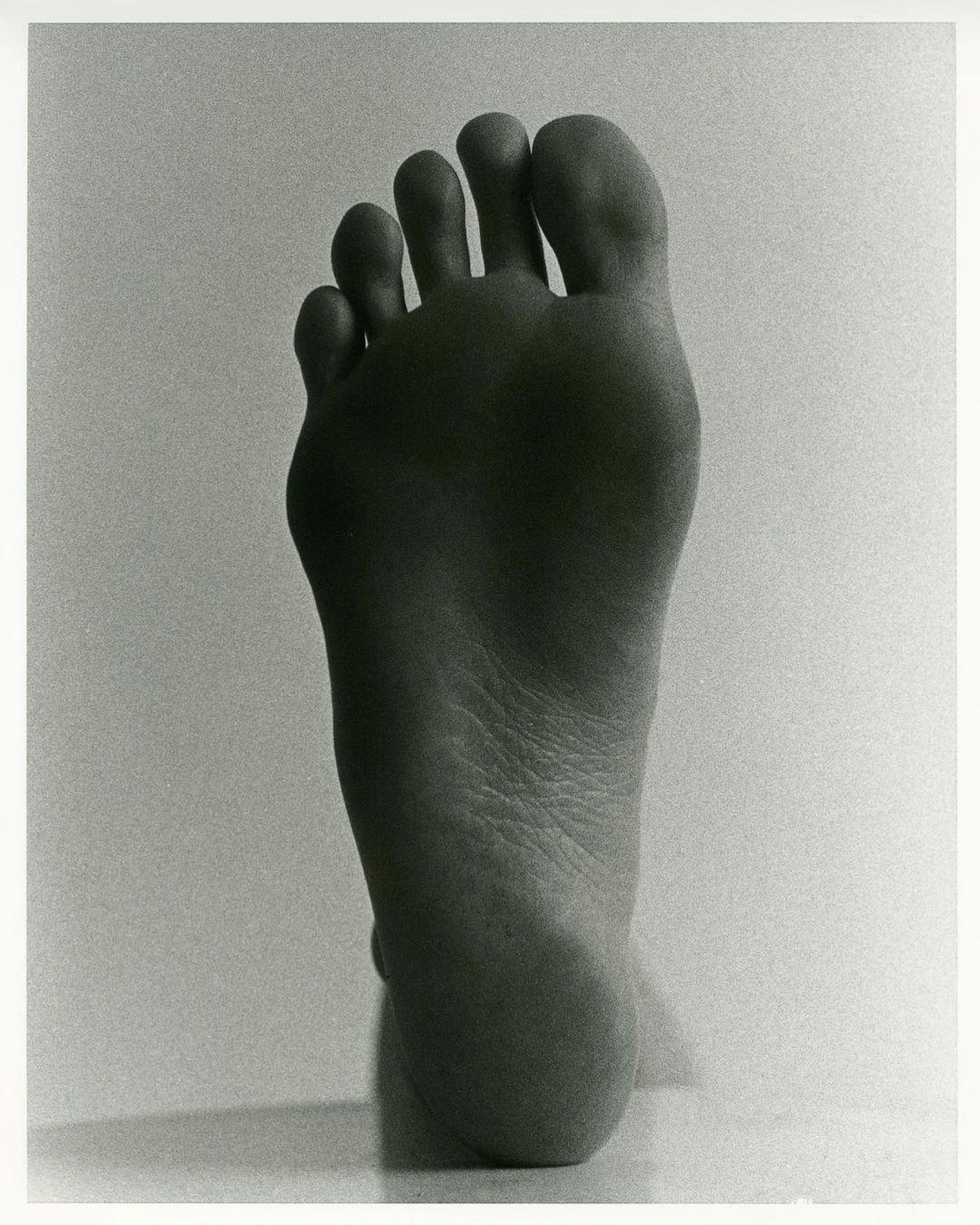
Your feet sustain you, ground you, and reveal you. Health, symbol, desire and identity — for those who dare to look down.
Podcast
Coming soonThe Pies de Mercurio podcast has not launched yet. We are building the archive of articles, interviews and photography first; we will announce it here when it is ready.
Manifest
In the world, every step counts. Every footprint leaves a mark on the path we walk as humanity. Yet few of us have stopped to reflect on the weight, beauty, symbolism, and eroticism that our feet can carry.
The foundation that sustains us
Before the symbol, before desire, feet are structure. They are the foundation upon which the entire body is built — 26 bones, 33 joints, over a hundred muscles and ligaments working in silence to keep us upright. In many traditions, walking barefoot on the earth is not merely a physical act: it is an act of grounding, of presence, of reconnection with what is essential. Our feet literally connect us to the ground beneath us.
A history that runs deep
In the ancient world, washing another person's feet was one of the deepest gestures of service and devotion that existed. In the time of Jesus, it was precisely that gesture he chose at the Last Supper to wash the feet of his disciples, inverting hierarchy and placing what is lowest at the center. In Islam, it forms part of ritual purification before prayer. In Hinduism, touching the feet of teachers is the deepest gesture of respect. In imperial China, the "golden lotus" was a symbol of beauty that concealed a practice of subjugation lasting a thousand years. In Greece and Rome, feet were a measure of the body's perfection.
In the contemporary era, Elmer Batters elevated them to objects of visual devotion and Tarantino inscribed them into the cinematic imagination. In the twenty-first century, digital platforms turned them into mass commodity — what had been underground for decades became accessible and popular. But as the market grew, understanding diminished. Pies de Mercurio comes to remind us that another level is possible: the one that exists when desire meets self-knowledge, and the fetish ceases to be merely a business and becomes a way of understanding oneself.
A turn toward self-knowledge
Traditional Chinese medicine and Ayurveda have spent centuries reading feet as a map of the entire body. Reflexology holds that every zone of the foot corresponds to an organ, a system, an emotion. Feet do not merely sustain us — they reveal us. Marx spoke of commodity fetishism, where objects acquire a value that conceals the social relations behind their production. Similarly, foot fetishism has been reduced to mere obsession, when in reality it can be a gateway to self-knowledge, personal expression, and mutual respect.
What we are must not be hidden
In a world that fears difference — where desire is judged and tastes are labeled as strange — Pies de Mercurio rises as a space of freedom, respect, and knowledge. Visibility is not the same as integration. There are people of twenty, thirty, fifty years old who grew up carrying this preference in silence — and who now watch it being commercialized without anyone ever offering them a real space to understand it. Admiration for the human foot is not a taboo: it is a legitimate expression of desire and human connection. And it deserves to be lived with awareness, with self-respect, and with the capacity to relate to others from a healthy place.
Our commitment
- Create educational and artistic content that inspires, informs, and empowers.
- Develop resources for self-knowledge and conscious exploration.
- Foster mutual respect and consent as essential principles of every relationship.
- Open spaces for dialogue to normalize and make visible this form of attraction.
Here we explore what others silence. Here, sensuality meets respect, and desire meets understanding.
“We don't write for the algorithm. We write for those who want to read slowly.”
Do you have a story to tell?
Are you a content creator, sexologist, or artist who wants to collaborate? Tell us your story.
Waiting list
Join to receive news before anyone else.